In brief
- India went from relying on US grain shipments in the 1950s to a record 332 million tonnes of food grain in 2023–24.
- Punjab led the Green Revolution: 1.5% of India’s land, but about 40% of the central pool’s wheat.
- The bill is now due: falling groundwater, heavy fertiliser use and fields locked into wheat and paddy.
Think of India, and the first impression is often that of a large, overpopulated developing country marked by widespread poverty and a predominantly agrarian economy. However, if I told you that agriculture accounts for less than a fifth of India’s economic output (17.7% of gross value added in 2023–24), yet the country is food-surplus and one of the world’s biggest food-grain exporters, you would be taken by surprise, wouldn’t you?
India’s agricultural sector has transformed dramatically since the post-independence era (1947–1960), when the nation faced severe food shortages and depended on subsidised grain imports from the United States—a period often referred to as the “ship-to-mouth” phase. In 2023–24, India achieved a record food-grain production of 332.22 million tonnes, driven by bumper rice and wheat harvests. Rice production reached 137.82 million tonnes, while wheat production stood at 113.29 million tonnes. Additionally, organic product exports surged by 34.6% in 2024–25, totalling USD 665.96 million, reflecting India’s growing presence in global agricultural trade.
Now consider that India had a rapidly growing population; without decisive action to become self‑sufficient, the problem of food shortages would only have worsened. Compounding this challenge was the country’s lack of modern irrigation systems and mechanisation, which further strained agricultural productivity. Imagine a nation historically known for its agrarian roots having millions of people in need of food—oh, the irony!

To tackle this issue, the Government of India (GoI) ushered in several initiatives, such as high-yielding crop varieties, better fertilisers and pesticides, and improved irrigation systems, to increase overall agricultural production.
Let me paint a picture for you of how things were and how they improved over the years.
- Seeds. Newer seed varieties were introduced, along with improvements in production facilities, which helped increase agricultural output. For example, earlier rice cultivation used to take around 150 -180 days to mature. High yielding seeds helped reduce this duration to just 100 days. This enables farmers to increase the number of cropping cycles in a year and, thus, earn higher incomes.
- Water. Early irrigation systems consisted of wells, lakes, ponds, and canals. However, for farmers, these methods were often ineffective, as they consumed and wasted large amounts of water. Today, techniques, such as drip irrigation systems and sprinklers help use water more efficiently, minimising wastage.
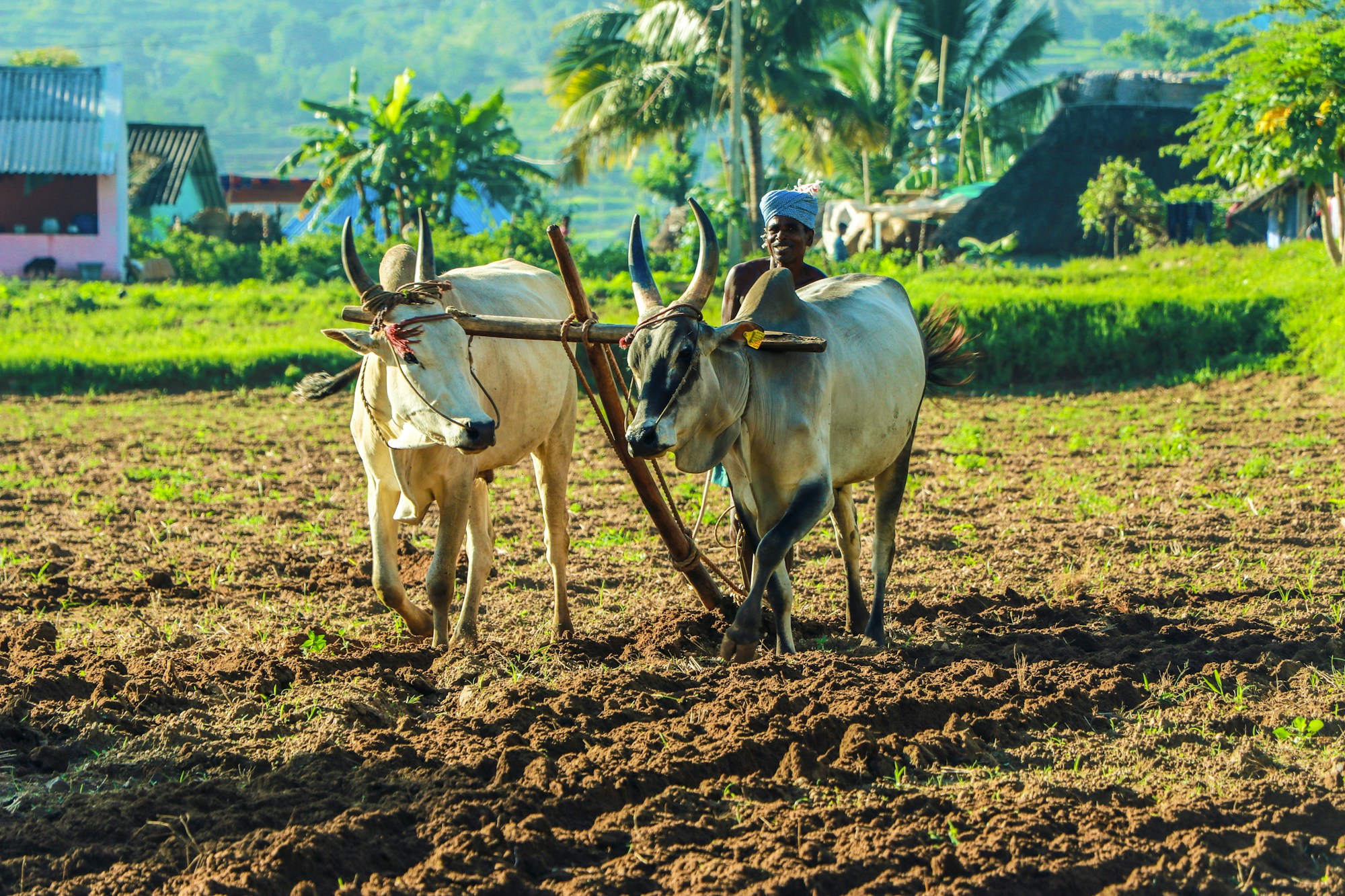
- Machines. Earlier, the agriculture sector relied heavily on manual labour and was largely labour-intensive. With improved technologies and mechanisation, farming has become more efficient, particularly in sowing and harvesting. For instance, the increased use of combine harvesters has reduced the need for manual labour while also speeding up agricultural processes.

In addition to the above initiatives, the GoI also funded agricultural universities, which researched ways to improve farming techniques and develop ideas to improve productivity. To encourage farmers to adopt these techniques, the government also provided subsidies.
In my opinion, the proactive role of the government has led to a substantial increase in food-grain production. As a result, a country that was once on the brink of famine is now considered the food bowl of the world.
And that’s what I call moving to the elite league!
Punjab – The Shrinking Food Bowl
Ask anyone to describe Punjab, and they are likely to speak of vast, lush green fields stretching for miles, with farmers working diligently under a bright blue sky on farms dotted with tube wells and tractors. While there is some truth to this picture, a closer look reveals that things are not quite so rosy.
When India embarked on the Green Revolution in the 1960s, Punjab was at its forefront. Blessed with fertile alluvial soil, an abundance of rivers, and extensive irrigation canal network, large landholdings, and the entrepreneurial spirit of its farmers, Punjab led the way in making India self-sufficient in food-grain production. Not surprisingly, it came to be known as the “Food Bowl of India.” Although the state occupies only 1.5% of the country’s geographical area, it contributes roughly 40% of the wheat and 31% of the rice in the central pool for the Public Distribution System (PDS) and buffer stocking.
Once a model of agricultural development for other Indian states, Punjab’s agricultural sector is now in deep crisis. It faces a triple challenge of fast‑depleting groundwater resources, deteriorating soil health due to pollution, and a deceleration in yield growth.
Challenge 1 · Depleting groundwater
The most critical challenge facing Punjab is the falling groundwater table, which has been falling by about half a metre a year on average, and by close to a metre a year in parts of central Punjab such as Sangrur and Patiala. Excessive cultivation of rice—despite it being unsuited to Punjab’s agro‑climatic conditions—requires large quantities of water. This has led to the rapid proliferation of tube wells across the state, resulting in the accelerated depletion of groundwater resources. As the area under rice cultivation has continued to expand, groundwater extraction has increased correspondingly to meet irrigation requirements. This trend has serious implications for both electricity consumption and long-term groundwater sustainability. Studies estimate Punjab’s demand for irrigation water at roughly 4.3–4.5 million hectare-metres (mhm) a year, against about 3.0–3.1 mhm available from canals and sustainable use of groundwater. The gap of more than 1 mhm is met by over-pumping groundwater through tube wells.
India’s farms run on groundwater
Every 100 irrigated hectares, by where their water comes from
62 in 100
irrigated hectares are watered by pumping water up from underground.
- Underground
- 46Tube wells
- 16Other wells
- Surface
- 24Canals
- 3Tanks
- Other
- 11Other sources
Source: Land Use Statistics, Ministry of Agriculture & Farmers Welfare (India, 2014–15).
Challenge 2 · Pollution and soil health
The intensification of the rice-wheat cropping system has led to the over-exploitation of groundwater, the imbalanced use of fertilisers, and the unabated burning of crop residues (mainly rice). These developments have adversely affected the sustainability of natural resources and the environment in Punjab. According to figures given in Parliament, Punjab used 223.46 kg of fertiliser per hectare in 2022–23, against a national average of 90 kg. In recent years, a decline in productivity has been observed, largely due to the deterioration of soil fertility. Excessive and inappropriate use of fertilisers and pesticides polluted waterways and destroyed beneficial insects and wildlife, resulting in soil overuse and rapid nutrient depletion.
Challenge 3 · Declining crop yields
Over the years, owing to the assured Minimum Support Price (MSP) system and large-scale procurement of rice and wheat by the central government at pre-determined prices, Punjab’s farmers have become overly dependent on these two crops, which together now cover more than 80% of the state’s gross cropped area. This dependence has come at the expense of diversification into other, higher-yielding and more sustainable crops such as pulses and maize.
From a third of Punjab’s fields to 85%
Share of Punjab’s cropped area under each crop, then and now
Values approximated from the chart previously used in this essay.
Farmers choose a crop portfolio that maximises their profits while reducing both production and market risks. Rice and wheat offer relatively higher returns and are associated with lower production as well as market risks. This has severely eroded farmers’ ability to maximise yields from their land; as a result, their only avenue for increasing income has been through an ever-rising MSP.
Where every ₹100 of farm growth came from
India’s agricultural growth split by source, then and now
Share from higher prices
Grey = diversification. Source: World Bank, sources of agricultural growth in India. Shares approximated from the World Bank chart previously used in this essay.
This dependence was also one of the main reasons behind the 2020–21 protests against the three farm laws, which were repealed in November 2021.
Conclusion
As Punjab grapples with the challenges facing its agricultural sector, there are no easy solutions, as the government realised during its attempt to introduce farm reforms. Addressing these issues will require significant government investments, particularly in subsidies for crop diversification. It will also demand greater adoption of water-saving irrigation technologies by farmers, along with focused efforts in pollution control and soil preservation. There is also a pressing need for a market-driven yet remunerative pricing mechanism that enables greater participation of the private sector in procuring agricultural produce. Given the rapid progress made by Indian entrepreneurs across industries in recent years, I remain optimistic that agri-tech represents the next major revolution waiting to happen in this country.
Sources
- PIB: Economic Survey 2023–24 (agriculture’s share of GVA)
- Business Standard: Foodgrain production hits record 332.22 MT in 2023–24 (final estimates)
- APEDA: Organic certification and export data under NPOP, 2024–25
- The Tribune: Punjab’s share of rice and wheat in the central pool
- Punjab State Warehousing Corporation: Punjab at a glance (share of India’s area)
- Mongabay India: Groundwater depletion in Punjab (CGWB decline rates)
- IWMI: Irrigation water demand and availability in Punjab
- The Tribune: Punjab tops fertiliser use (Rajya Sabha reply)
- Down To Earth: Paddy and wheat share of Punjab’s gross cropped area
- PRS India: The Farm Laws Repeal Bill, 2021
More from Croponomics